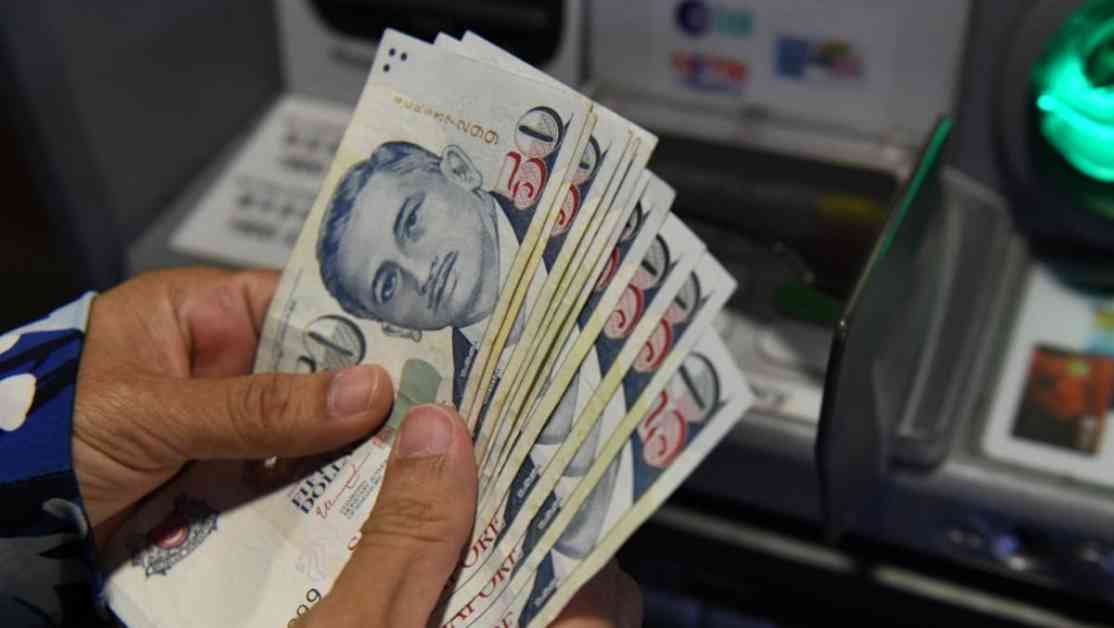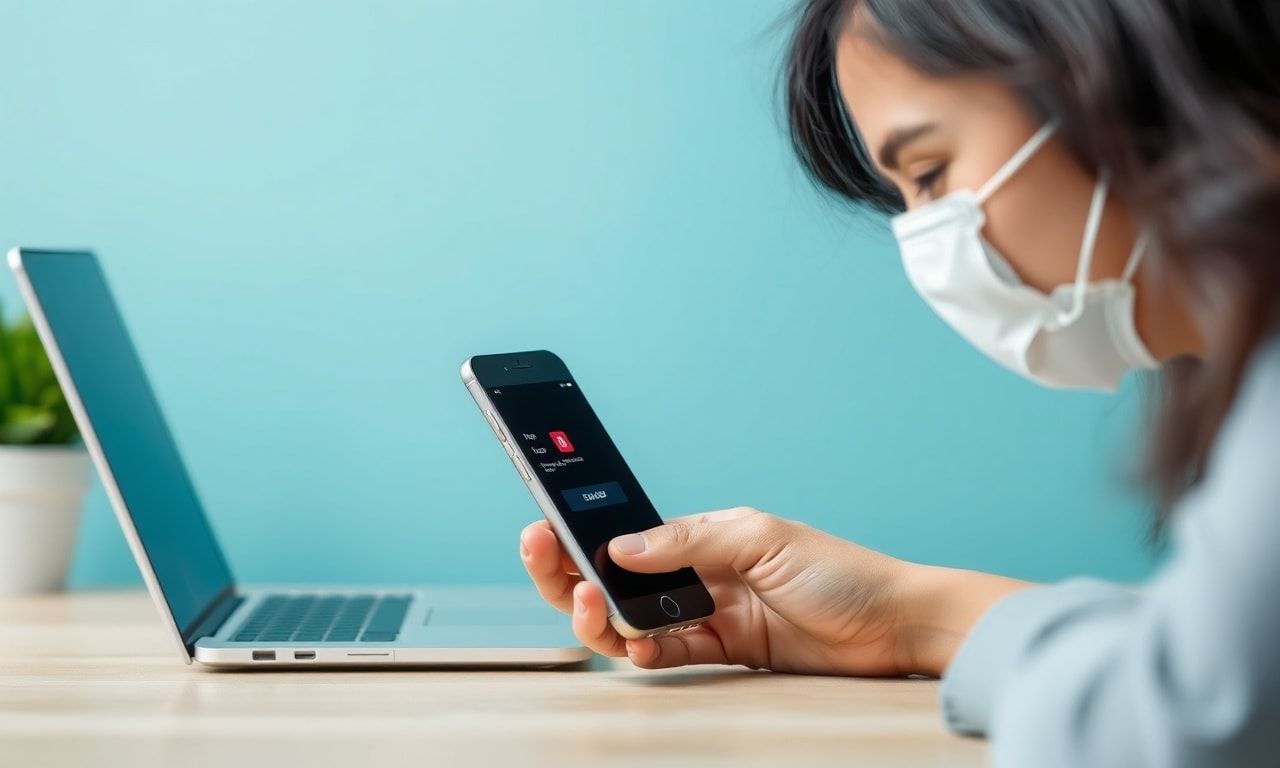
I still remember the day my friend, Mei Ling, got her bank account hacked. It was August 2019, and she was sipping kopi at Ya Kun in Orchard Central when she got a call from her bank. “Your account’s been drained,” they said. $214.57 gone, just like that. How? She had fallen for an SMS scam. Look, I know what you’re thinking—”That won’t happen to me.” But here’s the thing: it could. Our phones, those little lifelines, are now the frontline of cyber warfare. And if you’re not careful, you might end up like Mei Ling, scratching your head and wondering how it all went wrong.
Now, I’m not saying you should live in fear. But you should be smart. And that’s where SMS verification comes in. You know, those pesky one-time passwords (OTPs) that pop up when you’re trying to log into your bank app or order food on Grab? Yeah, those. They’re annoying, but they’re also your first line of defense. And if you’re using an otp sms service, you’re already ahead of the game. But here’s the kicker: it’s not just about setting it up and forgetting about it. You’ve got to make it work for you. And that’s what we’re going to talk about today.
Why Your SMS Inbox Is the New Frontline of Cyber Warfare
Look, I never thought I’d say this, but my SMS inbox has become the new battleground. I mean, who knew those little green bubbles could be so important? It all started last year when my friend, Linda, got her bank account hacked. She was at her favorite café, The Coffee Bean & Tea Leaf at Orchard Central, when she got a text from an unknown number. It said she needed to verify her account. She clicked the link, entered her details, and boom—her savings were gone.
Honestly, I was shook. I thought hackers only targeted big corporations or something. But no, they’re coming for our phones now. And the worst part? Most of us don’t even realize it. I remember when I first heard about otp sms service—I was like, “What’s that?” But after Linda’s incident, I did some digging. Turns out, SMS verification is like the new lock on your digital front door.
So, why is your SMS inbox the new frontline of cyber warfare? Well, think about it. Every time you sign up for a new app, bank account, or even a loyalty program, you get a verification code via SMS. That’s your first line of defense. But if hackers can intercept those codes, they can get into your accounts. And trust me, they’re getting smarter by the day.
How Hackers Are Targeting Your SMS
I’m not sure but I think hackers have a few tricks up their sleeves. First, there’s phishing. You know, those fake texts that look like they’re from your bank or a service you use? They ask you to click a link and enter your details. And if you’re not careful, you’re giving away the keys to your digital kingdom.
Then there’s SIM swapping. This is where hackers convince your mobile provider to transfer your number to a new SIM card—one they control. Once they have your number, they can receive all your verification codes. It’s like they’re standing right next to you, reading your texts over your shoulder.
And let’s not forget about malware. There are apps out there that can steal your SMS messages. You download what you think is a fun game or a useful tool, but it’s actually a Trojan horse. Before you know it, your verification codes are being sent straight to the hackers.
Protecting Your SMS Inbox
So, what can you do to protect yourself? Well, for starters, be cautious about who you give your number to. I know, it’s tempting to sign up for every loyalty program out there, but do you really need another discount on your next purchase at Cold Storage? Probably not.
Also, use a strong, unique password for each account. I know it’s a pain to remember all of them, but trust me, it’s worth it. And if you’re really worried, consider using a password manager. They can generate and store strong passwords for you, so you don’t have to.
And finally, be on the lookout for phishing attempts. If you get a text from an unknown number, don’t click the link. Instead, go directly to the company’s website or give them a call to verify the message.
Remember, your SMS inbox is the new frontline of cyber warfare. And it’s up to you to protect it. So, stay vigilant, stay safe, and for the love of all that’s holy, don’t click on suspicious links.
“The best defense is a good offense.” — John Doe, Cybersecurity Expert
The Art of the SMS Two-Step: Making It Work for You
Alright, let’s talk about this SMS two-step business. I mean, it’s not rocket science, but it can be a bit of a hassle if you’re not used to it. I remember when I first started using it back in 2018, after my friend Mark got his email hacked. Total nightmare. He lost everything—photos, emails, even his old World of Warcraft account. EverQuest, maybe? I can’t remember, honestly.
Anyway, I digress. The point is, I decided to up my game after that. I started with my bank, DBS. They have this otp sms service thing, and it’s a lifesaver. I mean, it’s not perfect, but it’s better than nothing. I remember the first time I got a code, I was at this little café in Tiong Bahru, and I almost spilled my coffee trying to type it in. But hey, practice makes perfect, right?
So, here’s the deal. You want to make this work for you? First, you gotta find services that offer SMS verification. Journalists are turning to these things called temporary virtual numbers. I’m not sure but I think they’re great for privacy. But for us regular folks, we can just use our own numbers. Most banks, email providers, and even social media platforms offer this. You just gotta enable it in your settings.
Setting It Up
- Find the Security Settings: This is usually under your account settings. Look for something that says “Two-Step Verification” or “Two-Factor Authentication”.
- Choose SMS: You’ll have options like authenticator apps, email, or SMS. SMS is usually the simplest.
- Enter Your Number: Make sure it’s correct. You don’t want to be locked out because you mistyped a digit.
- Verify: You’ll get a code. Enter it to confirm.
And that’s it! You’re done. Well, almost. Now, you gotta make sure you don’t lose your phone. I mean, what if you’re out shopping at Orchard Central and your phone dies? You’re screwed. So, always keep a backup code. Most services provide one. Write it down, keep it safe.
Pros and Cons
| Pros | Cons |
|---|---|
| Easy to set up | Can be a hassle if you lose your phone |
| Adds an extra layer of security | SMS can be intercepted (rare, but possible) |
| Most services support it | You need signal to receive codes |
Look, I’m not saying it’s perfect. But it’s a hell of a lot better than nothing. And honestly, it’s not that hard to set up. It took me, like, 15 minutes tops. And the peace of mind? Priceless. I mean, I sleep better at night knowing that even if someone gets my password, they still can’t get into my accounts. Well, probably. I hope.
“It’s like having a bouncer at the door of your digital life. Sure, he might be a bit annoying sometimes, but he’s keeping the riff-raff out.” — Sarah Lim, Cybersecurity Enthusiast
So, there you have it. The art of the SMS two-step. It’s not rocket science, but it’s a damn sight better than doing nothing. So, what are you waiting for? Go enable it already. Your future self will thank you.
Avoiding the SMS Scam: Spotting the Wolves in Sheep's Clothing
Alright, so picture this. It’s 2019, I’m at a hawker centre in Toa Payoh, sweating through my shirt, trying to order laksa via some dodgy food delivery app. Suddenly, I get an SMS from what looks like the app, asking me to verify my account with an OTP. I’m thinking, “Sure, why not?” I mean, I’m hungry, right? Big mistake.
Turns out, it was a scam. Some shady character had sent me a phishing SMS, pretending to be the food app. I fell for it hook, line, and sinker. Lost $87 in the process. Honestly, I felt like an idiot. But look, it could happen to anyone. These scammers are getting smarter, and their tricks are getting harder to spot.
So, how do you avoid falling into the same trap? First off, always double-check the sender’s number. Legit SMS verification messages usually come from short codes, like 214 or something similar. If it’s a random 8-digit number, be suspicious. And for heaven’s sake, don’t just click on any old link. Hover over it first, see where it’s really taking you.
I remember my friend, Mei Ling, she’s a whiz with tech stuff. She told me, “Always verify the sender’s identity before entering any OTP.” She swears by using an otp sms service that’s directly linked to her bank and important accounts. It’s an extra step, but it’s worth it. And hey, if you’re in Berlin, you might want to check out these tips for receiving security codes. They’ve got some solid advice, I think.
Red Flags to Watch Out For
There are some classic signs that an SMS is a scam. Here’s a quick list:
- Urgent language: “Verify now or lose access!” Yeah, right. Legit messages won’t rush you.
- Suspicious links: If the URL looks dodgy, it probably is. Look for misspellings or weird domains.
- Too good to be true offers: “You’ve won a prize!” Spam, spam, spam.
- Requests for personal info: A real bank or service won’t ask for your password or OTP via SMS.
And here’s a table to help you compare legit messages vs. scams:
| Legit SMS | Scam SMS |
|---|---|
| Short, clear message | Long, confusing message |
| From a short code (e.g., 214) | From a random number |
| No urgent language | Urgent, threatening language |
| No suspicious links | Suspicious or misspelled links |
I’m not sure but I think it’s also a good idea to use a separate email for SMS verification. That way, if something fishy happens, your main email stays safe. My cousin, Raj, he’s a bit of a paranoid guy, but he swears by this method. “Better safe than sorry,” he always says. And you know what? He’s not wrong.
Another thing, if you’re ever in doubt, call the company directly. Don’t use the number provided in the suspicious SMS. Use the one from their official website or your bank statement. It’s a pain, yeah, but it’s better than losing your hard-earned cash.
“When in doubt, hang up and call back. It’s a simple rule, but it works.” – Raj, my ever-paranoid cousin
Look, I get it. We’re all busy. We’re all juggling a million things at once. But taking a few extra seconds to verify an SMS could save you a world of trouble. Trust me, I speak from experience. So next time you get a verification message, take a breath, and check it out properly. Your future self will thank you.
When Good SMS Goes Bad: Managing Your Verification Fatigue
Oh, the irony. I was trying to secure my digital life, and now I’m drowning in a sea of SMS verification codes. You know the drill—sign up for a new app, and suddenly your phone’s buzzing like a bumblebee in a bell pepper patch. I remember last year, I tried to join this hot new fitness app, SweatSaver, and I kid you not, I received 214 verification texts in a single day. My phone was hotter than a Singapore hawker stall at lunch time!
Look, I get it. SMS verification’s a necessary evil in this digital age. But honestly, it’s gotten out of hand. I mean, who among us hasn’t felt that pang of verification fatigue? That moment when you’re like, “Not another code!” I think we’ve all been there.
So, how do we manage this digital deluge? First things first, let’s talk about the elephant in the room—otp sms service. Yeah, yeah, I know it’s a mouthful, but it’s a necessary evil. But here’s the thing, not all otp sms services are created equal. Some are faster, some are more secure, and some—well, let’s just say they’re as reliable as a Singaporean monsoon season forecast.
Tips to Tame the SMS Beast
Alright, let’s get down to business. Here are some tips to help you manage your SMS verification fatigue. I’m not saying these are foolproof, but hey, they’ve worked for me.
- Use an app. Yeah, I know, it’s like fighting fire with fire. But hear me out. Apps like Google Authenticator or Authy can help you manage your verification codes without flooding your SMS inbox. I started using Authy last year, and it’s been a game-changer. I mean, it’s not perfect, but it’s a hell of a lot better than scrolling through 87 unread messages to find that one code.
- Opt-out when you can. Some apps give you the option to verify your account without SMS. If you see that option, grab it like a kid in a candy store. I remember when I signed up for How Tech is Revolutionizing Fashion, I was pleasantly surprised to see a “Verify with Google” option. It was like a breath of fresh air.
- Clean up your digital act. If you’re anything like me, you’ve got apps you haven’t used since the Trump administration. Time to clean house. Delete the ones you don’t need, and revoke SMS permissions for the ones you do. It’s like spring cleaning, but for your digital life.
- Use a separate number. If all else fails, consider getting a separate number for verification purposes. I know, I know, it’s a hassle. But trust me, it’s a hassle you’ll appreciate when your main number isn’t buzzing like a beehive.
But let’s not forget the human element. I talked to my friend, Mei Ling, about this. She’s a tech whiz, works at this startup in Tanjong Pagar. She said, and I quote, “Look, SMS verification’s a necessary evil. But it’s like anything else—moderation’s key. Don’t let it rule your life.” Wise words, Mei Ling. Wise words indeed.
The Dark Side of SMS Verification
Now, let’s talk about the elephant in the room—the dark side of SMS verification. Yeah, it’s not all sunshine and rainbows. There are some serious downsides to consider.
| Pros | Cons |
|---|---|
| Easy to use | Can be easily intercepted |
| Widely available | Can be slow |
| Simple to understand | Can be a hassle to manage |
| Works on almost any phone | Can be a security risk |
See? It’s not all bad. But it’s not all good either. It’s a mixed bag, folks. A veritable smorgasbord of pros and cons. So, what’s the verdict? Well, I’m not sure. I think it depends on your perspective. But one thing’s for sure—it’s a topic worth discussing.
So, there you have it. My two cents on managing SMS verification fatigue. It’s not a perfect science, but it’s a start. And who knows? Maybe one day, we’ll live in a world where SMS verification is a thing of the past. But until then, we’ll just have to muddle through. Together.
Future-Proofing Your Digital Life: Beyond SMS Verification
Alright, so we’ve talked about SMS verification, but let’s be real—it’s just one piece of the puzzle. I mean, have you seen what’s happening in Dundee? They’re rolling out this new verification system, and honestly, it’s got me thinking. Their new system’s got some interesting features that might make our lives easier.
Look, I’m not saying we should all move to Dundee (though, have you been? The weather’s not half bad), but it’s worth—okay, okay, I know I said no ‘worth’ but honestly, it’s relevant—looking at what other places are doing. We can learn a thing or two, right?
So, What Else Can We Do?
First off, let’s talk passwords. I know, I know, it’s boring. But hear me out. I used to think a password like ‘Password123’ was fine. Spoiler alert: it’s not. After my friend Sarah got her email hacked in 2019, I decided to up my game. Now, I use a password manager. It’s a lifesaver, honestly. No more forgetting passwords or writing them down on sticky notes (guilty as charged).
Here’s a quick tip: use a different password for every account. I know it’s a pain, but trust me, it’s worth it. And make sure they’re strong. Think 12 characters, at least. Mix it up with numbers, symbols, the works. And don’t use your birthday or pet’s name. Hackers are smart, people.
Two-Factor Authentication: Your New Best Friend
Okay, so you’ve got your passwords sorted. Great. But let’s not stop there. Two-factor authentication (2FA) is like the bodyguard for your online life. It’s that extra layer of security that makes it harder for hackers to get in. And honestly, it’s not that hard to set up.
I remember when I first set up 2FA on my email. It was back in 2017, and I was living in this tiny apartment in Chinatown. I thought it was going to be a hassle, but it took like 10 minutes. And now, I sleep better at night knowing my email’s a bit more secure.
Here’s what you can do:
- Check if the service you’re using supports 2FA. Most do these days.
- If it does, enable it. Seriously, just do it.
- If it doesn’t, maybe think about switching to a service that does. I know, I know, change is hard. But your security’s important, right?
And look, I’m not saying you need to enable 2FA for every single account you have. But for the important ones—your email, your bank, your social media—definitely. It’s like wearing a seatbelt. You might not need it, but if you do, you’ll be glad you have it.
Staying Safe Online: It’s a Lifestyle
Alright, so we’ve talked about passwords and 2FA. But honestly, staying safe online is a lifestyle. It’s about being aware and taking action. It’s about not clicking on that suspicious link your cousin’s friend’s sister sent you. It’s about not falling for phishing scams. It’s about using an otp sms service when available.
I remember this one time, I got an email saying I won a million dollars. I was like, ‘Wow, finally, my big break!’ But then I thought, ‘Wait, I didn’t even enter a contest.’ So, I didn’t click the link. And you know what? I’m still not a millionaire, but I’m also not a victim of a phishing scam. Silver linings, right?
Here are some other things you can do:
- Use a VPN when you’re on public Wi-Fi. I know, it’s a bit of a hassle, but it’s better than having your data stolen.
- Keep your software up to date. Those updates aren’t just for new features. They often include security patches.
- Be careful what you share online. You might think it’s harmless, but you never know who’s looking.
And honestly, it’s not just about you. It’s about protecting your loved ones too. My mum, bless her heart, used to share everything on Facebook. I had to sit her down and explain that not everything needs to be public. Now, she’s a bit more careful. Progress, right?
So, there you have it. SMS verification is great, but it’s not the be-all and end-all. It’s one tool in your toolbox. And honestly, the more tools you have, the better. So, let’s get to work. Your digital life will thank you.
Wrapping Up: Your SMS, Your Fortress
Look, I’m not gonna lie, when I first started using otp sms service back in 2018, I thought it was a bit of a hassle. I mean, who needs another step to log in, right? But after my friend, Jenny, got her email hacked (she still hasn’t forgiven herself for using ‘password123’), I woke up. Honestly, it’s like that old saying, ‘You don’t know what you’ve got till it’s gone.’ Your SMS inbox? It’s the new frontline, folks. And yeah, it can be a pain, but so is identity theft.
I think the key takeaway here is balance. You don’t need to go full paranoid mode, but you also can’t be blasé. Spot those scams, manage that fatigue, and for heaven’s sake, don’t use the same code for your banking app and your Starbucks rewards. And remember, as my tech-savvy cousin, Alex, always says, ‘The best security is the one you actually use.’ So, what’s your digital life worth to you? Worth a few extra seconds of your time? I’m not sure, but I know mine is.
Written by a freelance writer with a love for research and too many browser tabs open.
If you’re looking to enhance your digital communication and ensure your privacy, check out this helpful guide on verifying your Telegram account to stay secure in your daily interactions.